
Tag: direct mail

  • Persuasive writing: 1 way to rule them all

    4208076125_93248afc6b_zName one of the three musketeers. I bet you said d’Artagnan.

    Bear with me on this one….

    He’s not one of the three – they are Athos, Porthos and Aramis. D’Artagnan is the fourth member who joins them, the one people remember most, the hero of the story.

    But hold that thought for a moment, while we back up on the history of persuasive writing.

    Persuasive writing – the old thinking

    In classical thought three were styles of persuasive writing, as defined by the likes of Aristotle:

    • Ethos appeals to credibility
    • Logos appeals to logic
    • Pathos appeals to emotions.

    So far, so sound. But there is, of course, a fourth way, one that includes but transcends the other three. And the technique is both obvious and simple: combine all three, so that you appeal to the widest possible audience and present a balanced and compelling argument.

    Can that work? Can it be so simple? Well, there’s a large school of direct selling copywriters who expend a lot of time and effort testing everything. And they agree with this approach.

    The Trifecta Neuro-Affective Principle – bonkers name, clever idea

    A few years ago one of the masters of the long-form sales letter, Maria Velosa, wrote a book called Web Copy That Sells: The Revolutionary Formula for Creating Killer Copy That Grabs Their Attention and Compels Them to Buy.

    In it, she outlines many of the techniques used by professional direct sales copywriters. However, she also acknowledges that as the internet has developed along with, social media and the rest, the sales letter is becoming increasingly marginalised.

    She recommends the use of a much shorter technique of persuasive writing, which goes under the snappy title of the Trifecta Neuro-Affective Principle. She writes:

    One extremely powerful method of changing someone’s mind is by presenting multiple versions of the same concept. In my experience, as well as in most cases that I’ve observed, the optimum number of versions that has the highest likelihood of making an impact is three.

    She says to persuade someone of something – to get them to change their mind about something – the best way, the shortcut way, is to use:

    three sales arguments presented in one digestible bite.

    There’s a lot to the principle, but to boil it down, it involves creating a compelling sales message that appeals to three different elements of human intelligence: narrative, quantitative, and logic. Or, in other words –

    • An emotional (narrative) reason
    • A credible (quantitative) reason
    • And a logical reason.

    So, to persuade someone of something (or indeed, to sell them something), you should employ the three traditional persuasive writing techniques combined and rolled together into one compelling sales message.

    All for one and one for all

    How do you do this, in web sales copy, or a blog? In a letter, an essay, a report? Well, you need to do it quickly. Get to the point, get it into a few hundred words or less if you can.

    In fact, I would suggest you do it in as little as two or four sentences and three bullet points:

    You set up with a sentence that summarises the core message you’re trying to get across, then cut to your bullets:

    • Appeal to their emotions: how will it make them feel?
    • Establish credibility by using figures and statistics to back up your case.
    • Present the logical reason for agreeing with the argument or buying the product.

    Then you can round it all off with another sentence or two. For a sales pitch, this might address any remaining resistance they may have.

    There you have it – persuasive writing in a nutshell. How to sell stuff on the Internet. How to persuade people and win arguments in the world of social media. Persuasive writing, the fourth way.

    Or as I’m calling it, the “d’Artagnan manoeuvre”.


    Pic: Persuasion by reihayashi on Flickr. 


  • Copy that squares the circle for Cube Consult

    Marketing and branding text for ebusiness consultancy
    Marketing and branding text for consultancy

    Creating a well-rounded sales pitch

    Cube Consult asked me to help with their marketing by writing some compelling and clear text for a sales leaflet to be distributed to potential clients.

    As is standard practice in marketing materials, I began by setting out the problem or challenge the prospect faces – in this case looking at how taking the first steps into ebusiness can be daunting and confusing. There are myriad consultancies offering help – but will they be the right people, there for the long-haul?

    Having set the scene, the copy moved on to presenting what my client, Cube Consult, could offer.

    But I wanted to bring it all to life. I wanted to make Cube appear friendly, approachable and human. So I indulged in a little word play, designed to reinforce the branding and make it more memorable:

    Wording that enhances the branding.
    Wording that enhances the branding.

    Stop going round in circles
    Cube is a new kind of eBusiness consultancy – one that can square these circles for you. Cube goes beyond the advice and planning stage to offer a complete implementation strategy and end-to-end project management.

    We use only leading industry professionals with proven track records and the solutions we deliver are proven to work.

    Refreshingly, perhaps uniquely, you’ll also find that Cube won’t encircle you with jargon. It’s eBusiness delivered by approachable professionals who’ll explain things clearly and always put you in the picture.

    [blockquote-right]”I’m lost for words! This is genius.”[/blockquote-right]

    When I sent him the copy, Chris Currie of Cube Consult contacted me to say: “I’m lost for words! This is genius. As soon as I started reading it I broke into a smile that is still on my face. Thank you so much – I’m quite simply delighted!”

  • Brochures, direct mail, letters and mailers for software giant SAP
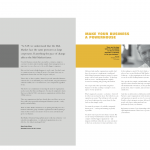
    Explaining the benefits of technology – in clear English

    SAP is one of the world’s biggest software companies – creators of the one of the leading ERP (enterprise resource planning) solutions. This is the kind of software used to run major corporations – and it can handle everything from controlling robots on the factory floor to administering the HR department and fine-tuning the supply chain for precision parts delivery. (more…)

  • Adverts and postcards for the Chagos environmental campaign

    Chagos environmental campaign

    Creative campaign for environmental cause

    The Chagos Islands lie in the middle of the Indian Ocean – the world’s largest coral atoll made up of 55 tiny islands in quarter of a million square miles of the world’s cleanest seas.

    The official name for the islands is the British Indian Ocean Territory, and they have belonged to Britain since the Treaty of Paris in 1814. The only inhabited island is Diego Garcia, which is home to a military base.

    The waters around the islands are exceptionally clean and the coral reefs have not, so far, been significantly damaged by human pollution or climate change. A survey in 1996 concluded that the waters around the archipelago were the cleanest anywhere in the world.

    I was asked to help create marketing literature in support of a campaign to protect and preserve this pristine natural environment. (more…)

  • Copywriting for the launch of new Adobe software
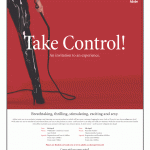
    advert for software companyWhen Adobe launched a new version of Acrobat, I was asked to write a direct mail campaign, emailers and a series of press adverts specifically targeting the designer community in the UK.

    Adobe also wanted to promote its capabilities in other areas – specifically workflow solutions for large enterprises.

    The challenge was to explain what Adobe’s software products had to offer, cutting through a lot of technical jargon and marketing-speak.

    brochure for IT companyThe literature was mainly targeted at senior managers, IT departments and C-level board members. My job was to get their attention and convince them of the proven business benefits.

    The range of literature I worked on included white papers, direct mail  and advertising. In particular I was involved in writing a series of brochures, some targeted at specific sectors, including government, manufacturing and finance. I also wrote a large overview brochure, which summarised the entire Adobe offering in the area of enterprise solutions.

    Adobe HRdm(not final)